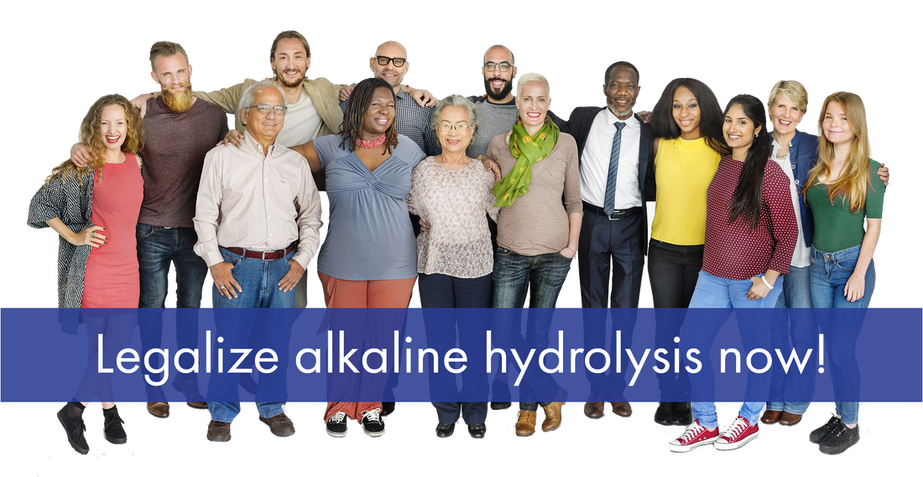
When faced with the death of a loved one, British Columbians can only choose between burial and fire cremation. There is another alternative, already offered in the provinces of Saskatchewan, Ontario, Quebec, Newfoundland/Labrador and the Northwest Territories, and that is alkaline hydrolysis, aka aquamation.
What is alkaline hydrolysis aka aquamation?
We compiled a few videos for you to watch and learn about this technology.
If you prefer a written version of alkaline hydrolysis, and the history behind it, you can download a printable version here.
If you prefer a written version of alkaline hydrolysis, and the history behind it, you can download a printable version here.
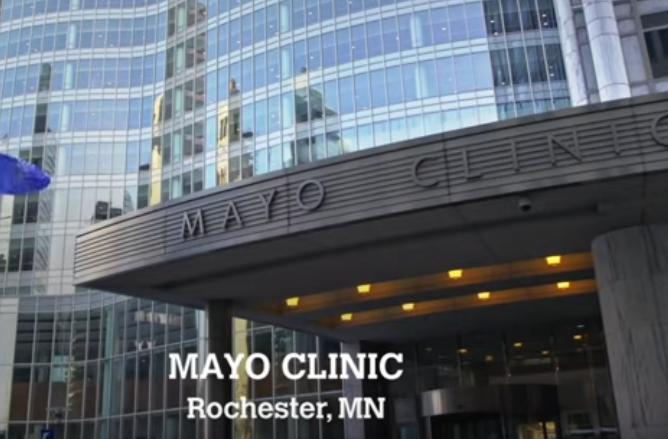
What is alkaline hydrolysis?An excellent 4 minute video from the Mayo Clinic, one of the first installations of alkaline hydrolysis in 2006.
|
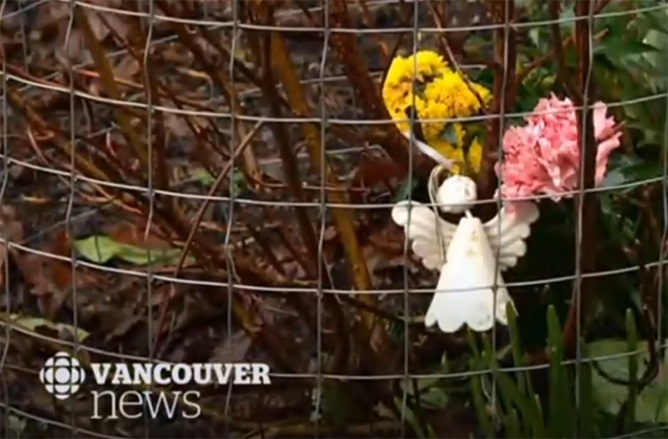
CBC interview 2020Interview with a B.C. citizen about aquamation and a funeral director.
|
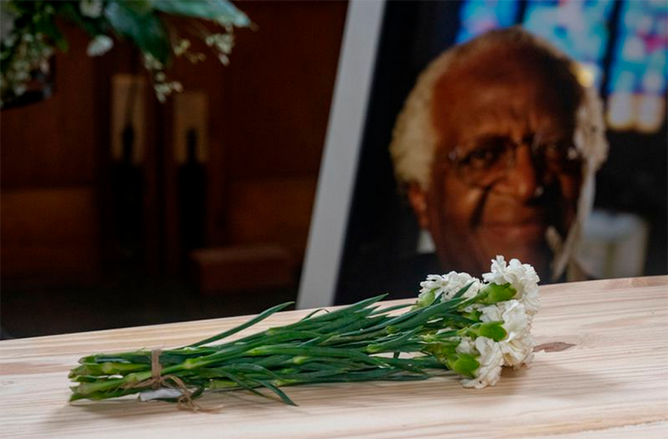
Desmond TutuLong known as not only an anti-apartheid activist and theologian, but also a champion of environmental causes, Desmond Tutu chose aquamation.
|
How can I help?
Since 2012, several funeral directors and supporters have been meeting with Consumer Protection BC, as they regulate the cemetery and funeral services in the province, known as the Cremation, Interment and Funeral Services Act.
Presentations were made, meetings were held, information was submitted and 10 years later, we are still waiting for our province to finally approve this alternative to burial and fire cremation.
Presentations were made, meetings were held, information was submitted and 10 years later, we are still waiting for our province to finally approve this alternative to burial and fire cremation.
Below are all the ways you can help! Be sure to sign the petition!!
It is now time to reach out to....
- Premier David Eby - Honourable Mike Farnworth - Honourable George Heyman - Rob Gialloreto - CPBC - Mark Revie - BCFA ....and tell them you deserve the right to choose! |
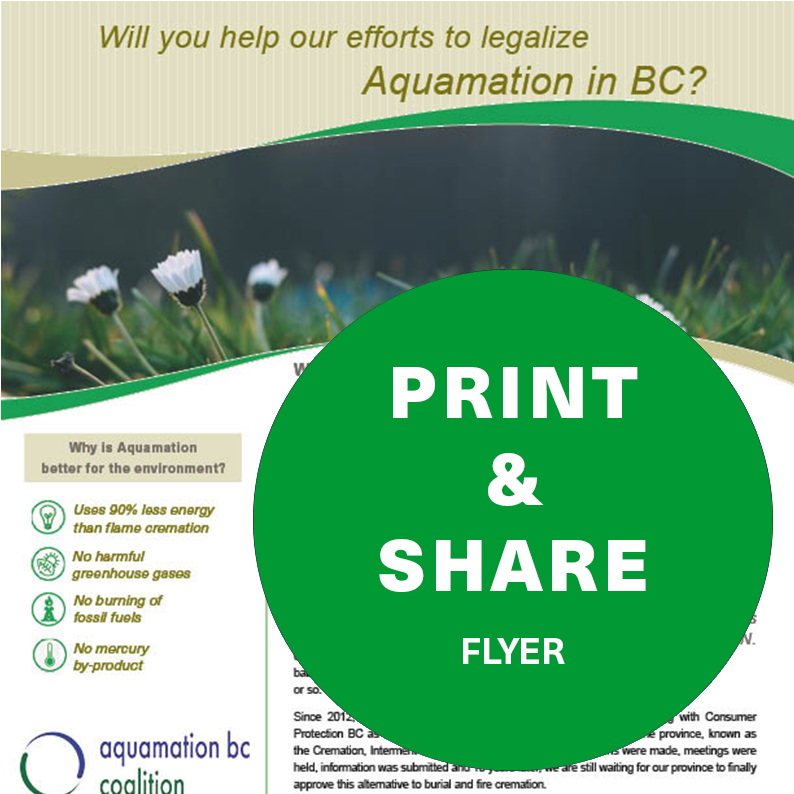
We created this flyer that can easily be shared with friends, family, work colleagues, groups/organizations that you work with, or simply put it up on bulletin boards around your neighbourhood!
Let us know if you need a flyer customized for you - we will be happy to provide one. Contact Us here. |
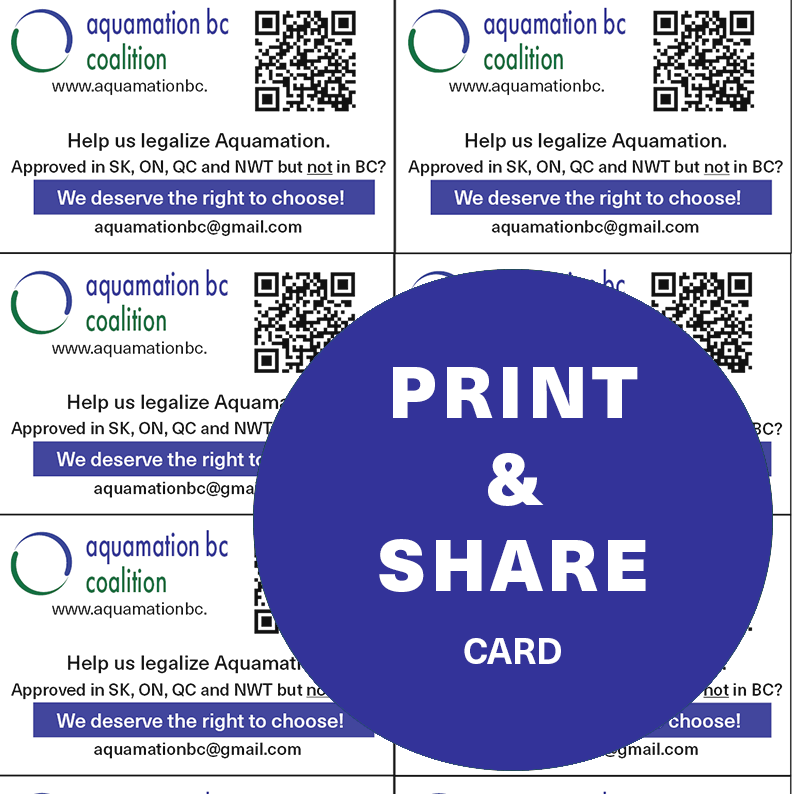
We created this handout with 8 wallet size cards. Easy to print and cut, share and share away! Let's get the word out that British Columbians deserve the right to choose!
Let us know if you need these cards customized for you - we will be happy to edit these. Contact Us here. |
We need you to do this!
Click on DONATE for more info 
Click the icons to the right !
|